Contact

Operational Telecoms

Operational voice, radio, Help Point calls and Public Address, brought together on IP.

Railway telecoms for operations: operational voice and telephony, SIP and VoIP, GSM-R and radio, Help Point communications and Public Address integration, on TDM's NIS platform.

Operational telecoms on TDM NISTDM Help Points, third-party SIP devices, Public Address and GSM-R and radio connect to TDM NIS, whose ComNodes provide call-server, switching and routing. Calls reach operator terminals by role; gateways connect existing PBX systems, public and private networks and ISDN, and a Session Border Controller manages SIP trunks to external systems.FieldPlatformOperators and networksTDM Help PointsSIP and VoIPThird-party SIP devicesStandards-based SIP interfacesPublic AddressStation announcementsGSM-R and radioAnalogue and digital radioTDM NISComNodes: call server, switching,routingOperator terminalsCalls routed by roleGatewaysPBX, public and private networks,ISDNSession Border ControllerSIP trunks to external systemsFieldPlatformOperators and networksTDM Help PointsSIP and VoIPThird-party SIP devicesStandards-based SIP interfacesPublic AddressStation announcementsGSM-R and radioAnalogue and digital radioTDM NISComNodes: call server, switching, routingOperator terminalsCalls routed by roleGatewaysPBX, public and private networks, ISDNSession Border ControllerSIP trunks to external systems

Overview

The communications behind rail operations

TDM delivers operational communications systems for rail, bringing together voice communications, Help Points, Public Address and associated operational systems through IP-based communications and integration platforms. The TDM Network Information System (NIS) is one of those platforms.

  • Operational voice and telephony
  • SIP and VoIP
  • GSM-R and radio integration
  • TDM NIS
  • Help Point communications
  • Public Address integration
  • System integration
  • Monitoring and management
  • Network interfaces
  • Migration and resilience

TDM NIS

Call server, switching and routing on every node

The TDM Network Information System (NIS) is TDM’s IP-based operational communications platform. It brings different communication services and third-party applications into one operational communications environment, for voice, call handling, routing, integration, monitoring and management. Its ComNodes provide call-server functionality, voice switching, call routing and system interconnection, and work autonomously in a meshed system with no single central core. The platform is modular and scalable, configured around each operator’s requirements.

TDM NIS
ComNodes in a meshed systemCalls, messages and alarms from Help Points, telephony and SIP reach TDM NIS ComNodes, which provide call-server, switching and routing. The ComNodes work autonomously in a meshed system with no single central core, and routing adjusts automatically when a path fails, so calls still reach operator terminals by role.ArrivesComNodesReaches the operatorCalls, messages, alarmsHelp Points, telephony and SIPComNodeCall server, switching, routingComNodeRouting adjusts automaticallyOperator terminalsCalls routed by roleNo single central coreArrivesComNodesReaches the operatorCalls, messages, alarmsHelp Points, telephony and SIPComNodeCall server, switching, routingComNodeRouting adjusts automaticallyOperator terminalsCalls routed by role

SIP and VoIP

SIP trunks, interfaces and third-party devices

SIP telephony, SIP trunks and SIP interfaces run alongside VoIP communications. Session Border Controller technology manages the SIP trunks that connect the communications environment with external systems, and standards-based SIP interfaces let compatible third-party devices connect into it. Calls are routed over SIP, and TDM’s VICOS call point electronics use SIP signalling.

SIP in operational telecomsSIP Help Points with VICOS call point electronics and third-party SIP devices connect to TDM NIS through standards-based SIP interfaces, and calls are routed over SIP. A Session Border Controller manages the SIP trunks that connect the communications environment with external systems.SIP devicesPlatformExternalSIP Help PointsVICOS call point electronicsThird-party SIP devicesStandards-based SIP interfacesTDM NISSIP call routingSession Border ControllerManages SIP trunksExternal systemsConnected over SIP trunksSIP devicesPlatformExternalSIP Help PointsVICOS call point electronicsThird-party SIP devicesStandards-based SIP interfacesTDM NISSIP call routingSession Border ControllerManages SIP trunksExternal systemsConnected over SIP trunks

GSM-R and radio

Radio and telephony dispatched from one terminal

TDM delivers safety critical communication systems for rail, including GSM-R fixed terminal system (FTS) dispatching. In a rail control centre, TDM delivered GSM-R and fixed telephony dispatching to controller workstations, integrated with the train describer system, with SMS-C interfaces for text messages, long-term recording of operational voice and system management terminals, on a geo-redundant platform with hot standby. NIS operator terminals combine GSM-R, analogue or digital radio and telephony in one device, and the radio dispatcher handles individual, group and conference calls and monitors several radio channels at once. Analogue radio and TETRA and Tetrapol digital radio integrate as options.

GSM-R and radio on TDM NISGSM-R, analogue radio and TETRA and Tetrapol digital radio connect to TDM NIS, whose radio dispatcher brings radio and fixed telephony to controller workstations in one device. Dispatching is integrated with the train describer system, and operational voice is recorded. Analogue and digital radio integration are options.RadioPlatformControl centreGSM-RFixed terminal dispatchingAnalogue radioOptional integrationDigital radioTETRA and Tetrapol, optionalTDM NISRadio dispatcherController workstationsRadio and telephony in one deviceTrain describerIntegrated with dispatchingVoice recordingOperational communicationsRadioPlatformControl centreGSM-RFixed terminal dispatchingAnalogue radioOptional integrationDigital radioTETRA and Tetrapol, optionalTDM NISRadio dispatcherController workstationsRadio and telephony in one deviceTrain describerIntegrated with dispatchingVoice recordingOperational communications

Help Point communications

Help Point calls routed to the right operator

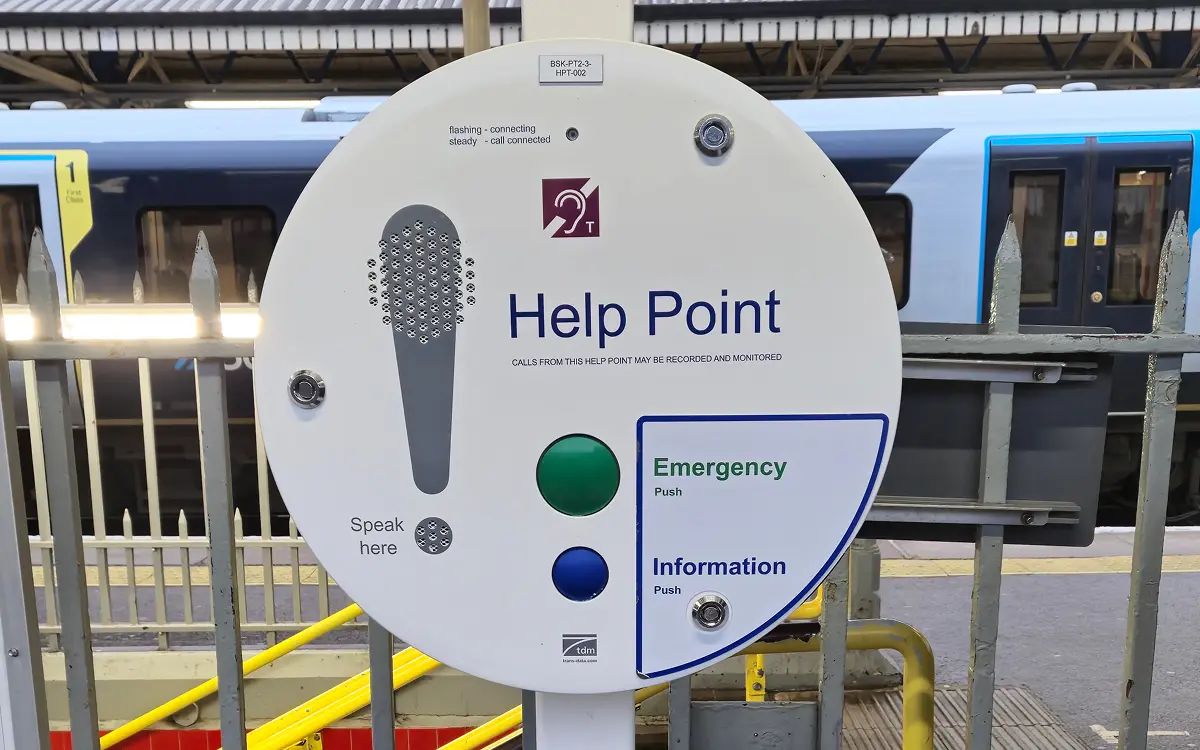
TDM Help Points connect over 4G or VoIP, including SIP-based Help Points, and their calls reach the control centre through TDM NIS, routed by role. At Basingstoke ROC, TDM upgraded NIS, then configured and commissioned it alongside a network Help Point renewal.

Help Points
Help Point call chainA TDM two-button Help Point connects over 4G or VoIP to TDM NIS, TDM's operational communications platform, which routes the call to staff at the control centre.PlatformConnectivityControl centreTDM two-button Help PointInformation and emergency buttons4GTDM 4G replacement kitVoIPTDM VoIP replacement kitTDM NISCall managementControl centre staffPlatformConnectivityControl centreTDM two-button Help PointInformation and emergency buttons4GTDM 4G replacement kitVoIPTDM VoIP replacement kitTDM NISCall managementControl centre staff

Integration

Gateways to the networks already in place

NIS provides call-server, switching and routing functionality and can integrate with existing PBX systems. Dedicated gateways connect it to private or public networks and to ISDN or analogue telephony, and Public Address announcements can be made through it within a station scheme.

Public Address
TDM NIS operational communicationsTDM Help Points, VICOS call points and, through gateways, existing PBX systems, telephony, VoIP and radio networks connect to TDM NIS, which routes calls, text messages and alarms by role to operator terminals. Each operator's roaming profile follows them to any terminal, and a central management tool configures the system.ConnectedPlatformControl centreTDM Help PointsPassenger callsVICOS call pointsRemote management with SNMPGatewaysPBX, telephony, VoIP and radioTDM NISCalls, messages and alarms by roleOperator terminalsRoaming profilesCentral managementConfiguration and softwareConnectedPlatformControl centreTDM Help PointsPassenger callsVICOS call pointsRemote management with SNMPGatewaysPBX, telephony, VoIP and radioTDM NISCalls, messages and alarms by roleOperator terminalsRoaming profilesCentral managementConfiguration and software

Migration and resilience

Kept in service as PSTN and ISDN lines switch off

Existing systems migrate to NIS in steps through its gateways. After the BT analogue (PSTN) switch-off made ISDN-connected Help Points obsolete, TDM moved an estate to 4G and current components and phased the NIS configuration at Puddle Dock KICC, so Help Points stayed operational. Routing elements can be set up with multiple redundancies, routing adjusts automatically when a network failure is detected, and NIS management tools monitor, configure and update TDM’s VICOS call point electronics remotely, with SNMP diagnostics.

Migration to TDM NISExisting systems migrate to TDM NIS in steps through its gateways. On a network-wide Help Point upgrade, ISDN components were replaced with 4G and 2G and 3G components brought to current technology, while the NIS configuration was phased so Help Points stayed in service.LegacyIn stepsPlatformISDNReplaced with 4G2G and 3GBrought to current technologyAnalogue telephonyConnected through gatewaysGatewaysMigration in stepsTDM NISPhased configurationHelp Points kept in serviceLegacyIn stepsPlatformISDNReplaced with 4G2G and 3GBrought to current technologyAnalogue telephonyConnected through gatewaysGatewaysMigration in stepsTDM NISPhased configuration

Why TDM

One supplier from Help Point to platform

  • Delivered and supported by TDM

    TDM supplies, configures and supports TDM NIS, the VICOS call point electronics and the TDM Help Point.

  • Migrated without losing service

    Phased NIS configuration kept Help Points operational through a network-wide upgrade.

  • Standards-based SIP

    SIP interfaces connect compatible third-party devices and external systems.

Projects

Operational Telecoms case studies

Discuss Operational Telecoms for a site.